- Sector -2, B Block Noida-201301
- info@tradingshastra.com
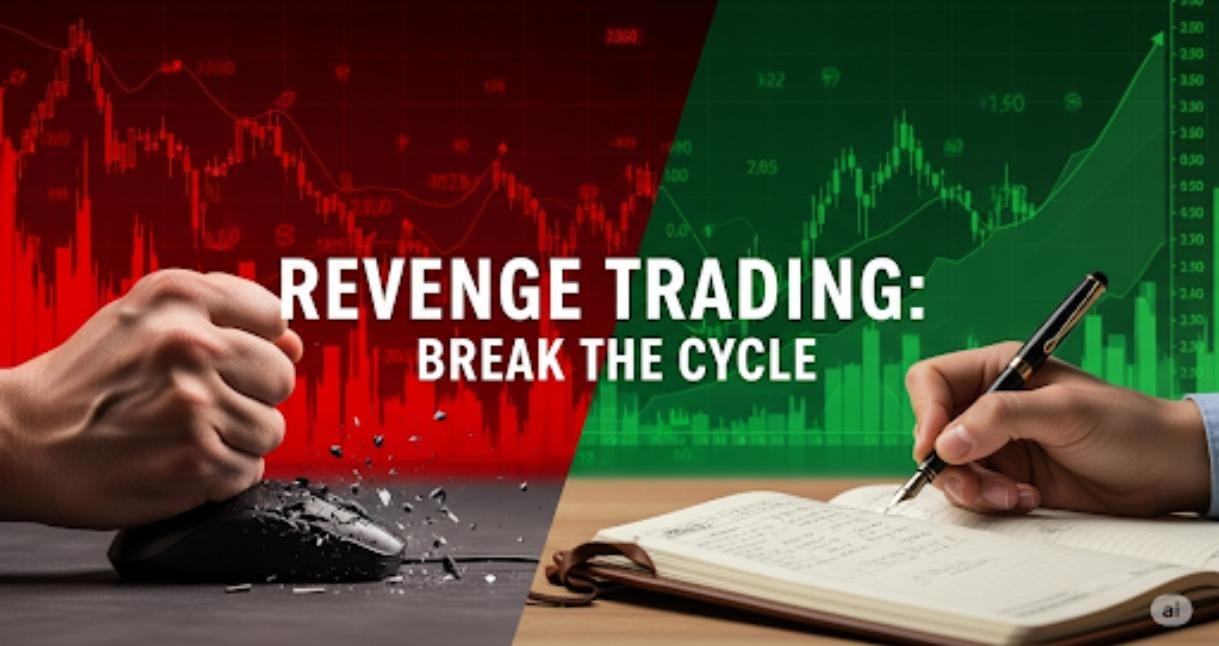
Revenge Trading: How to Break the Cycle and Recover Like a Pro
Revenge trading represents one of the most destructive behaviors in financial markets, where traders attempt to recover losses through impulsive, emotionally-driven decisions. This pattern of revenge trading often begins with a significant loss that triggers emotional responses rather than logical decision-making. The cycle of revenge trading typically involves increasing position sizes, abandoning risk management rules, and chasing markets without proper analysis. Understanding revenge trading is crucial for any serious trader because this behavior has destroyed more trading accounts than any market crash or bad strategy.
At Trading Shastra, we’ve observed that revenge trading affects nearly 80% of traders at some point in their journey. The psychology behind revenge trading involves our brain’s natural response to losses – we feel the pain of losses approximately twice as intensely as we feel the pleasure of equivalent gains. This emotional imbalance fuels revenge trading and creates a self-destructive pattern that can be incredibly difficult to break without proper intervention and awareness.
The Psychology Behind Revenge Trading
Emotional Triggers
Revenge trading typically gets triggered by:
Significant financial losses in a short period
Missing out on profitable opportunities
Seeing other traders succeed while you struggle
Personal life stress affecting trading decisions
Ego and the need to prove yourself right
Neurological Factors
Research shows that revenge trading activates the amygdala, the brain’s fear center, while suppressing the prefrontal cortex responsible for rational decision-making. This neurological response explains why otherwise disciplined traders engage in revenge trading – their brain literally switches from analytical mode to survival mode.
Behavioral Patterns
Common characteristics of revenge trading include:
Abandoning trading plans and rules
Increasing position sizes dramatically
Overtrading and chasing markets
Ignoring technical analysis and fundamentals
Refusing to accept losses and move on
The Vicious Cycle of Revenge Trading
Phase 1: The Initial Loss
The revenge trading cycle begins with a meaningful loss that creates emotional pain. This could be a single large loss or a series of smaller losses that accumulate psychologically.
Phase 2: Emotional Reaction
Instead of accepting the loss analytically, the trader experiences anger, frustration, or embarrassment. This emotional state triggers the desire for revenge trading to recover losses quickly.
Phase 3: Impulsive Action
The trader enters new positions without proper analysis, often with larger size than normal. This revenge trading phase involves abandoning all risk management principles.
Phase 4: Compounding Losses
The revenge trading positions typically result in further losses, creating more emotional pain and reinforcing the cycle. This phase often leads to account-threatening damage.
Phase 5: Psychological Damage
Beyond financial losses, revenge trading creates psychological scars that affect future trading decisions through loss of confidence and increased fear.
Proven Strategies to Break the Revenge Trading Cycle
Immediate Intervention Techniques
When you feel revenge trading urges:
Step Away Immediately: Close all platforms and take a 24-hour break
Physical Exercise: Release emotional tension through movement
Journaling: Write down your emotions and thoughts objectively
Meditation: Practice mindfulness to regain mental clarity
Talk to Someone: Share your feelings with a trading mentor or psychologist
Systematic Prevention Methods
To prevent revenge trading long-term:
Implement Trading Rules: Create strict rules about daily loss limits
Use Position Size Caps: Limit maximum position size to prevent catastrophic losses
Automate Risk Management: Use technology to enforce discipline
Regular Psychology Work: Incorporate mental training into your routine
Performance Review: Analyze losing trades objectively weekly
Cognitive Restructuring Techniques
Change your thinking patterns about revenge trading:
Reframe losses as learning opportunities
Accept that losses are part of the business
Focus on process rather than outcomes
Develop detachment from individual trade results
Practice self-compassion after losses
Trading Shastra’s Recovery Framework
The 48-Hour Rule
We teach our students to implement a mandatory 48-hour cooling period after any significant loss. This break from trading prevents revenge trading by allowing emotions to settle and rational thinking to return.
Loss Limit Protocol
Establish strict daily and weekly loss limits that automatically stop your trading when reached. This systematic approach prevents revenge trading by removing the opportunity for impulsive decisions.
Mental Reset Process
Develop a specific routine to reset mentally after losses:
Acknowledge the emotional response without judgment
Analyze the loss objectively from a technical perspective
Identify lessons learned and improvements needed
Plan the next steps without time pressure
Return to trading only when emotionally neutral
Building Emotional Resilience
Developing Self-Awareness
The key to overcoming revenge trading is recognizing your personal triggers and emotional patterns. Keep a trading journal that tracks not just your trades but also your emotional state and thought processes.
Creating Support Systems
Build a network of trading peers and mentors who can provide objective perspective when you’re struggling with revenge trading urges. Sometimes, an outside view is all you need to avoid destructive behavior.
Professional Help
For traders who consistently struggle with revenge trading, seeking professional psychological help can be transformative. Cognitive behavioral therapy has proven particularly effective for addressing revenge trading patterns.
See Our More Blogs:
Frequently Asked Questions (FAQs)
Q1: How common is revenge trading among professional traders?
Revenge trading affects traders at all levels, but professionals have systems to minimize its impact. Approximately 60-70% of retail traders struggle with revenge trading regularly, while professionals experience it but have better control mechanisms.
Q2: Can revenge trading ever be successful?
While occasional revenge trading might result in profits, it’s essentially gambling rather than trading. The few times it works reinforce the dangerous behavior, leading to larger losses eventually.
Q3: How long does it take to overcome revenge trading?
Breaking the revenge trading cycle typically takes 3-6 months of consistent effort with proper systems and support. However, vigilance is required indefinitely as triggers can resurface during stressful periods.
Q4: What’s the difference between revenge trading and aggressive trading?
Revenge trading is emotionally driven and undisciplined, while aggressive trading can be part of a calculated strategy with proper risk management. The key difference is the emotional state and decision-making process.
Q5: Can automated trading prevent revenge trading?
Automation can significantly reduce revenge trading by removing emotional execution, but traders might still interfere with automated systems during emotional periods. Complete prevention requires psychological work.
Outbound Resources:
Disclaimer:
Trading involves significant risk of financial loss. Revenge trading represents emotional rather than analytical decision-making. This content is for educational purposes only and should not be considered psychological or financial advice. Past performance does not guarantee future results.
Ready to Overcome Revenge Trading? Join Trading Shastra’s psychology mastery program to develop emotional discipline and break destructive trading patterns forever.
Trading Shastra Academy
B-11, Sector 2, Noida – 201301
Website: www.tradingshastra.com
Email: info@tradingshastra.com
Phone: +91 9717333901
Hours: Monday – Saturday: 11:00 AM – 6:00 PM IST