- Sector -2, B Block Noida-201301
- tradingshastraacademy@gmail.com
Trump’s Tariff Bomb on Indian Pharma: What Does It Mean for India, the U.S, and the World?
What exactly did Trump announce?
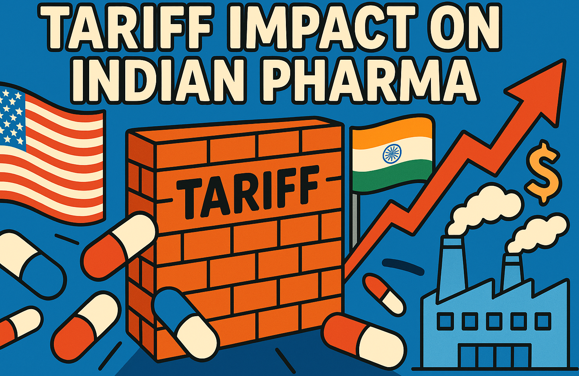
On September 25, 2025, President Donald Trump dropped a shocker: a 100% tariff on all branded and patented pharmaceutical imports starting October 1. The twist? Companies with U.S. manufacturing plants get a free pass. Alongside drugs, tariffs also hit heavy trucks (25%), kitchen cabinets (50%), and upholstered furniture (30%).
Why is this such a big deal for India?
U.S. is India’s biggest pharma customer. Nearly 34% of India’s drug exports land in America, which is estimated to be worth $10.5 billion in FY25. Indian pharma giants like Sun Pharma, Dr. Reddy’s, and Lupin rely heavily on U.S sales. Even though the tariffs target branded drugs, the fear is clear: what if generics get hit next?
How big is India’s pharmaceutical industry?
Enormous. Valued at $50 billion (2023), India supplies 20% of global generics. It’s called the “Pharmacy of the World” because it provides low-cost medicines to over 200 countries. India also has the highest number of U.S. FDA-approved plants outside America (600+ plants). This shows how deeply linked India and the U.S. are in healthcare supply chains.
What’s the background of U.S.–India trade tensions?
This tariff is part of a bigger story. In early 2025, Trump imposed 25% tariffs on Indian imports, later hiked to 50%, citing “reciprocal fairness.” He accused India of buying cheap Russian oil and maintaining high tariffs on U.S. goods. Pharma had been spared last time because of its essential role. But now Trump has shifted gears, targeting even healthcare.
Why are Indian markets reacting nervously?
Because pharma isn’t just another sector — it’s India’s export crown jewel. The moment tariffs were announced, the Nifty Pharma index slid 2.6%, thus pulling the entire market down. For investors, it’s not about today’s loss — it’s about tomorrow’s uncertainty. If Washington widens the net, billions of dollars are at risk.
Are all Indian pharma exports under fire?
Not yet. The tariffs are only on branded and patented drugs, which form a smaller slice of India’s U.S exports. The bulk is generics, which are safe as of now. But here’s the catch: the U.S. market is shifting toward complex generics and biosimilars, and if tariffs extend there, India could face a tsunami.
Trump’s pitch is clear: “Make America Manufacture Again.” He argues that the U.S. should not depend on foreign nations for life-saving drugs. By imposing tariffs but exempting U.S.-based plants, he’s forcing global drugmakers to set up factories in America. It’s a carrot-and-stick strategy — punish imports and reward local investment.
Which Indian companies are most exposed?
Companies like Sun Pharma, Biocon, and Aurobindo have branded and biosimilar portfolios in the U.S., making them more vulnerable. Firms heavily tilted toward generics may be safer — for now. But the real fear is policy creep: once tariffs start, expanding their scope is easier.
Could this make medicines costlier for Americans?
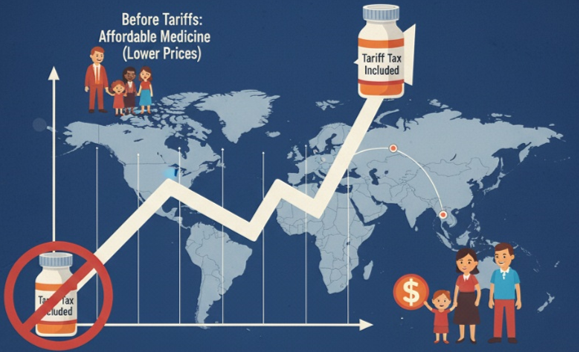
Absolutely. Tariffs are taxes — and taxes raise prices. The U.S. already has the highest drug prices globally. If imports from India become costlier, hospitals, insurers, and patients will feel the pinch. For branded drugs with few substitutes, Americans may see a direct rise in prescription costs within months.
How has India responded so far?
Cautiously. New Delhi is in damage-control mode, consulting pharma leaders and weighing WTO options. Some reports suggest India may file a trade dispute or consider retaliatory tariffs on U.S. exports. But since pharma is a lifeline export, India cannot afford a full-scale trade war. Expect diplomacy before aggression.
Could Indian pharma shift production to the U.S.?
That’s exactly what Trump wants. The exemption for companies with U.S. plants is a direct push for on-shoring. Big players like Sun Pharma and Dr. Reddy’s might explore U.S. manufacturing, but smaller firms will struggle. Costs in America are far higher, and India’s competitive advantage lies in low-cost, large-scale production. If forced to relocate, India would be risking its “Pharmacy of the World” status.
What does this mean for global healthcare?
It’s bigger than India vs. U.S. Millions in Africa, Asia, and Latin America rely on India’s cheap medicines. If Indian firms lose revenue in the U.S., they may hike prices elsewhere or cut supply. The risk? A global medicine shortage or price surge. In other words, a U.S trade war could morph into global healthcare crisis.
How did investors digest the news?
They panicked. Pharma shares tumbled across the board. Sun Pharma, Cipla, and Biocon all saw sharp intraday losses. The Nifty Pharma index’s 2.6% drop reflected not just immediate impact but fear of escalation. Global investors also worry about a ripple effect: higher U.S drug prices, squeezed margins for Indian companies, and uncertain trade negotiations.
What risks lie ahead?
Three big risks lie ahead:
- Scope expansion — tariffs may spread to generics and biosimilars.
- Supply chain disruption — Indian firms may cut exports, raising U.S. costs.
- Diplomatic fallout — if India retaliates, U.S. agriculture and tech exports could face tariffs.
At stake: India’s $50B pharma sector and Trump’s trade agenda.
What should we watch next?
- Policy updates from Washington — Will generics be next?
- India’s counterstrategy — WTO, diplomacy, or retaliation.
- Corporate moves — Which Indian pharma giants set up U.S. plants?
- Consumer impact — How will medicine prices change for American consumers?
One thing is certain, the story is far from over.
Final Word
Trump’s pharma tariff isn’t just about trade — it’s about power, politics, and public health. India’s “Pharmacy of the World” title faces its biggest challenge till date, while U.S. patients may soon pay the price. With $10.5 billion in exports on the line, the world is watching whether this clash ends in cooperation, confrontation, or chaos.